Celebrate Halloween Night Greeting Cards: Evaluating Vector Assets for Modern Design
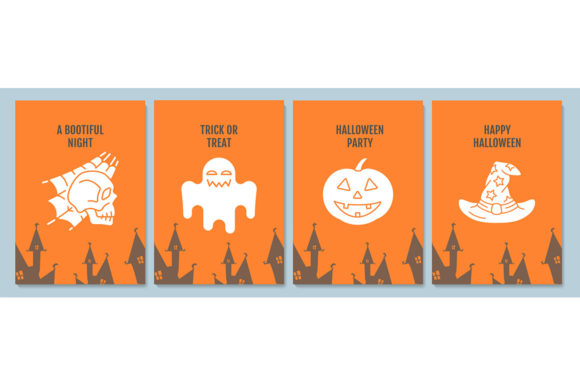
Selecting the right visual assets for seasonal campaigns requires balancing aesthetic appeal with technical versatility. When designers and marketers evaluate resources like the Celebrate Halloween Night Greeting Cards collection, they are typically looking for more than just a festive image; they are assessing a functional design system. This specific asset package distinguishes itself by combining greeting card layouts with a comprehensive glyph icon element set, all rendered in a creative, simple postcard vector style. For professionals aged 20 to 50 who manage diverse content needs—from social media banners to printed invitations—understanding the specific utility of this minimalist approach is essential for making an informed procurement decision.
The core value proposition of Celebrate Halloween Night Greeting Cards lies in its departure from hyper-realistic or overly complex horror aesthetics. Instead, it utilizes a decorative invitation style with minimal illustration. This design choice is not merely stylistic but strategic. Minimalist vector art scales infinitely without loss of quality, making it suitable for everything from mobile app screen pages to large-format signage. Furthermore, the inclusion of celebratory text within creative banner formats reduces the need for extensive typography work, allowing for faster turnaround times during the busy autumn season. However, this streamlined aesthetic is not universally applicable, and comparing it against alternative styles is necessary to determine fit.
Comparing Minimalist Vectors Against Traditional Halloween Aesthetics
To understand where Celebrate Halloween Night Greeting Cards fits within the broader design landscape, one must compare it against other prevalent Halloween asset categories. The market generally offers three distinct tiers of seasonal graphics: photorealistic stock imagery, intricate hand-drawn illustrations, and flat vector art. Each serves a different communication goal.
Photorealistic assets excel at creating atmosphere and emotional intensity. They are ideal for immersive event promotions or editorial content requiring a cinematic quality. However, they often lack flexibility; you cannot easily recolor a photograph to match brand guidelines, nor can you isolate individual elements without advanced masking. Intricate hand-drawn illustrations offer unique character and warmth but can become visually muddy when scaled down for icons or mobile interfaces. They also tend to have fixed compositions that resist modification.
In contrast, Celebrate Halloween Night Greeting Cards occupies the flat vector niche. The tradeoff here is atmospheric depth in exchange for supreme adaptability. Because these designs rely on shape and color rather than texture and lighting, they integrate seamlessly into corporate newsletters, educational materials, and modern web interfaces where cleanliness is prioritized over spookiness. If your project demands high-impact horror or vintage nostalgia, this minimalist set may feel too sterile. Conversely, if your objective is clear communication across multiple touchpoints, the vector approach offers superior functional performance compared to raster-based alternatives.
Evaluating Technical Formats and Workflow Integration
A critical factor in choosing digital assets is file format compatibility. The Celebrate Halloween Night Greeting Cards package includes JPEG, AI, PNG, EPS, and SVG formats. Understanding the specific use case for each is vital for maximizing return on investment.
- SVG (Scalable Vector Graphics): Essential for web and mobile app screen pages. SVGs remain crisp on retina displays and allow for CSS-based animation or color manipulation directly in the browser. This format is the primary reason to choose vector assets over standard images for digital products.
- AI and EPS: These source files are necessary for print production and heavy customization. If you need to alter the "celebratory text" or rearrange the glyph icon element set to create a custom brochure template, these formats provide the editable paths required. Users without Adobe Illustrator or compatible vector software will find these files less immediately useful.
- PNG: Best for overlaying elements onto existing designs. The transparency support allows designers to drop a pumpkin glyph or bat icon into a presentation slide or email header without managing background removal.
- JPEG: Suitable only for final output where editing is not required, such as social media posts or quick previews. Relying solely on JPEG negates the primary benefits of purchasing a vector set.
When comparing this product to generic stock photo subscriptions, the multi-format delivery is a significant differentiator. Many stock platforms charge premiums for vector downloads or limit access to source files. Having AI, EPS, and SVG included ensures that the asset remains viable as design trends shift or as deliverables change from digital to print mid-campaign.
Strengths and Limitations of Glyph Icon Sets in Seasonal Design
The inclusion of a glyph icon element set transforms Celebrate Halloween Night Greeting Cards from a single-use template into a modular design kit. Glyphs are solid, simplified symbols that function effectively at small sizes. This makes them invaluable for UI design, infographic elements, and bullet points in brochures. For example, a marketing team could use the main greeting card for an email header while utilizing the accompanying glyphs to create a consistent visual language throughout the body copy or navigation menu.
However, there are limitations to consider. Glyph icons prioritize recognition over detail. They communicate concepts like "bat," "candy," or "ghost" instantly but lack narrative nuance. If your campaign relies on storytelling or specific cultural references, a standalone glyph set may be insufficient. Additionally, the "creative simple postcard vector design" aesthetic assumes a certain level of design literacy. While the assets are editable, achieving a professional result still requires an understanding of hierarchy, spacing, and color theory. Non-designers expecting a plug-and-play solution may find that the minimalist nature of the assets requires more compositional effort than a pre-rendered, complex scene.
Another consideration is brand alignment. Minimalist vector art tends to skew modern, tech-forward, or corporate-friendly. Organizations with heritage brands, rustic aesthetics, or luxury positioning might find the clean lines and flat colors discordant with their established identity. In such cases, exploring textured vectors or line-art alternatives might yield better cohesion, even if they sacrifice some scalability.
Decision Factors: When to Choose BSD Studio Resources
BSD studio provides a range of resources including icons, brochure templates, infographic elements, and mobile app screen pages. Deciding whether to source Celebrate Halloween Night Greeting Cards from this provider versus a general marketplace depends on ecosystem consistency. Sourcing multiple asset types from a single studio often results in better visual harmony across disparate materials. A glyph set from BSD studio is likely to share stroke weights, corner radii, and stylistic DNA with their infographic elements and app screens.
This consistency is particularly valuable for agencies or in-house teams managing year-round content. Mixing assets from various creators often leads to a disjointed user experience where the Halloween newsletter looks nothing like the Q4 financial report. If your workflow already incorporates BSD studio templates, adding their seasonal greeting cards reduces friction. Conversely, if you require highly specialized or niche Halloween imagery that falls outside their minimalist vector scope, a dedicated niche illustrator or a broader stock aggregator may be more appropriate.
Cost-efficiency also plays a role in the evaluation. Bundled sets that include both full compositions (greeting cards/banners) and atomic elements (glyphs/icons) typically offer better value per usable asset than purchasing singles. For professionals producing high volumes of seasonal content, the ability to remix a single set into dozens of variations justifies the initial acquisition cost. However, for a one-off personal project or a low-stakes internal memo, a free or lower-cost alternative might suffice. The premium associated with professional-grade vector sets is justified primarily by commercial licensing, editability, and cross-platform reliability.
Practical Applications and Best-Fit Scenarios
To synthesize the evaluation, Celebrate Halloween Night Greeting Cards is best suited for specific professional contexts. It excels in corporate communications where festivity must be balanced with professionalism. It is ideal for SaaS companies, educational institutions, healthcare providers, and B2B services that want to acknowledge the holiday without alienating stakeholders through graphic content. The vector format makes it particularly strong for responsive web design, where assets must adapt to varying viewport widths without pixelation.
The resource is less appropriate for entertainment venues, horror film marketing, or children’s party planning where maximalism and specific thematic details drive engagement. In those scenarios, the simplicity that makes this set versatile becomes a liability. Similarly, teams lacking vector editing capabilities should proceed with caution; while PNG and JPEG options exist, the true ROI is locked behind the AI/EPS/SVG formats.
Ultimately, the decision hinges on the intersection of aesthetic requirements and technical constraints. By weighing the adaptability of minimalist vector art against the atmospheric needs of the campaign, and by verifying format compatibility with existing workflows, professionals can determine if this specific asset collection aligns with their strategic goals. The presence of complementary resources like brochure templates and mobile app screens from BSD studio further tips the scale for users seeking systemic design consistency over isolated visual novelty.