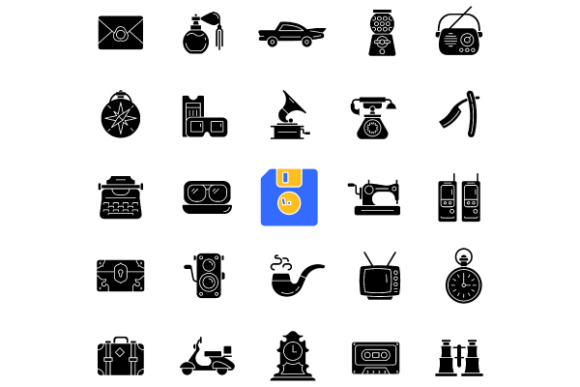
Evaluating the Vintage Style Black Glyph Icons Bundle for Professional Design
In the landscape of digital and print design, finding visual assets that balance historical authenticity with modern usability is a persistent challenge. The Vintage Style Black Glyph Icons Bundle addresses this specific niche by offering a curated collection of silhouette symbols designed to evoke a retro aesthetic without sacrificing vector precision. For professionals managing tight deadlines, this resource represents more than just decorative clip art; it is a functional toolkit for establishing visual identity across brochures, mobile applications, and infographics. Understanding the practical application of these assets requires looking beyond their nostalgic appeal to evaluate their technical versatility and integration into contemporary workflows.
Defining the Retro Aesthetic in Modern Vector Graphics
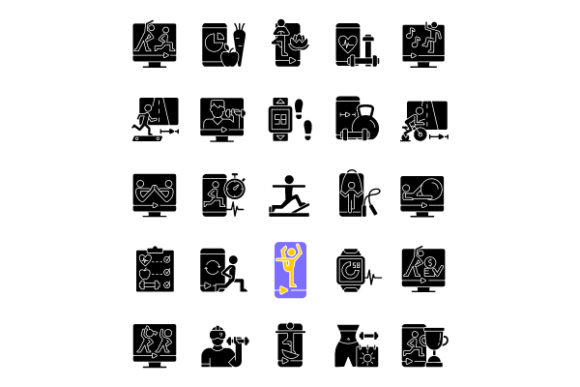
The core value of this collection lies in its adherence to the glyph format. Unlike detailed illustrative icons that rely on gradients or complex shading, glyphs are solid, single-color silhouettes. This stylistic choice is deliberate. When designing with a vintage theme, intricate details often become muddy at small sizes or when printed on textured paper. The Vintage Style Black Glyph Icons Bundle leverages high-contrast black forms against white space to ensure legibility regardless of scale. This makes them particularly effective for user interface elements in mobile apps where screen real estate is limited, or for footnote markers in editorial layouts where clarity is paramount.
The "collectable antique model" approach mentioned in the product description suggests that each icon has been treated as a distinct artifact rather than a generic placeholder. In practice, this means the set avoids the sterile uniformity often found in mass-produced icon packs. Instead, the symbols carry subtle imperfections and stylistic flourishes characteristic of mid-century printing or Victorian engraving. For designers tasked with creating branding materials for heritage brands, museums, or artisanal products, this level of thematic consistency saves significant time that would otherwise be spent manually distressing clean vectors or sourcing inconsistent public domain images.
Technical Versatility Across File Formats
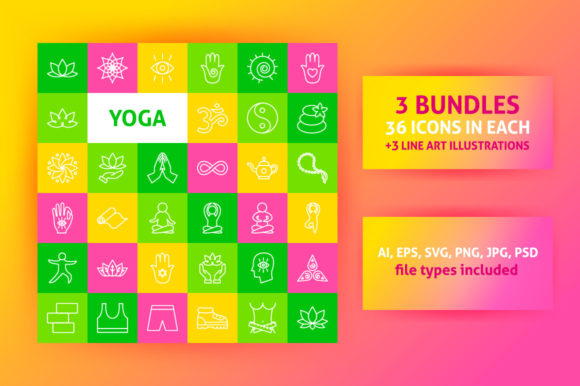
A critical factor in evaluating any design asset is its compatibility with various software ecosystems and output requirements. This bundle provides files in JPEG, AI, PNG, EPS, and SVG formats, covering the spectrum from raster web use to scalable print production. Each format serves a distinct purpose in a professional workflow:
- SVG and EPS: These are the primary working files for designers. Being vector-based, they allow for infinite scaling without pixelation. More importantly, they enable color manipulation. While the bundle is presented as "black glyphs," having editable vectors means a designer can instantly recolor the entire set to match a specific brand palette or adapt to dark mode interfaces.
- AI (Adobe Illustrator): Essential for users who need to modify the anchor points or combine multiple glyphs into composite illustrations. This source file format ensures maximum editability for custom projects.
- PNG: Pre-rendered with transparency, these are invaluable for quick mockups, presentation decks, or non-designers who need to drop an icon into a document without navigating vector software.
- JPEG: While less flexible due to the lack of transparency, these serve as reliable reference thumbnails or placeholders during the initial concepting phase.
The inclusion of isolated vector illustrations ensures that no time is wasted masking out backgrounds. For agencies producing high-volume content like infographic elements or brochure templates, this readiness is a measurable efficiency gain. The assets are prepared for immediate deployment, reducing the friction between concept and execution.
Practical Applications and Workflow Integration
The utility of the Vintage Style Black Glyph Icons Bundle extends across multiple disciplines. Marketers and entrepreneurs often need to convey complex ideas quickly in social media graphics or pitch decks. Retro iconography acts as a visual shorthand, instantly communicating concepts like "craftsmanship," "history," or "tradition" without requiring extensive typography. For educators and publishers, these silhouette symbols provide a cohesive visual language for textbooks or e-learning modules, helping to break up dense text while maintaining a serious, academic tone appropriate for adult learners.
In mobile app design, specifically for lifestyle, travel, or e-commerce applications targeting demographics aged 20–50, these icons offer a way to differentiate from the prevailing minimalist flat design trend. A navigation bar utilizing carefully crafted vintage glyphs can reinforce brand positioning and create a more immersive user experience. However, designers must exercise judgment here. Because these icons carry strong stylistic weight, they work best when supported by complementary typography and layout choices. Using them in isolation within a hyper-modern, neon-colored interface may create visual dissonance unless that contrast is the intentional goal.
Strengths in Brochure and Print Design
Print media remains a stronghold for vintage aesthetics. When designing brochures, business cards, or packaging, ink coverage and reproduction quality are constant concerns. Solid black glyphs are forgiving in print production; they reproduce crisply even on lower-quality uncoated stocks where fine lines might break up. The bundle’s focus on silhouettes aligns perfectly with letterpress and risograph printing techniques, which favor bold, simple shapes. For small business owners handling their own marketing materials, this reliability reduces the risk of costly reprinting errors caused by overly delicate artwork.
Assessing Quality and Long-Term Value
Beyond immediate utility, professional creatives must consider the longevity of their asset libraries. Trends cycle rapidly, but well-executed vintage design tends to have a longer shelf life than trendy futuristic or meme-centric graphics. BSD Studio’s provision of varied topics and file types suggests an understanding of this need for sustainable resources. When evaluating this specific bundle, the consistency of stroke weight and negative space across the set is what determines its long-term value. A disjointed set where some icons appear heavy and others spindly will eventually be abandoned. Based on the description of "silhouette symbols" and "vector isolated illustration," this collection appears structured to maintain visual harmony, allowing individual icons to be mixed and matched without breaking the design system.
Furthermore, the licensing and source reliability matter. Sourcing vintage imagery from disparate online repositories often leads to legal gray areas and mismatched resolutions. Obtaining a unified bundle from a dedicated provider mitigates copyright risks and ensures technical standardization. For freelancers and agencies billing clients for commercial work, this peace of mind is as valuable as the pixels themselves.
Considerations and Limitations for Users
While the Vintage Style Black Glyph Icons Bundle is a robust resource, it is not a universal solution. Professionals should recognize specific limitations to avoid misapplication. First, the "retro style look" is inherently specific. It is unsuitable for tech startups emphasizing futurism, medical institutions requiring clinical sterility, or corporate entities needing neutral, invisible UI patterns. Attempting to force a vintage aesthetic onto an incompatible brand can undermine credibility.
Secondly, while glyphs are versatile, they lack the semantic nuance of multi-colored or outlined icons. In complex data visualization or instructional diagrams where color coding is necessary for comprehension, solid black silhouettes may require additional labeling or contextual cues to remain accessible. Designers working on accessibility-compliant projects must ensure sufficient contrast ratios and provide alternative text that accurately describes the vintage symbol, as screen readers cannot interpret stylistic intent.
Finally, users should assess the depth of the library against their specific project needs. If a campaign requires highly specific historical artifacts (e.g., a specific model of 1920s camera or a particular architectural landmark), a general vintage bundle may only serve as a supplementary element rather than a comprehensive solution. It is advisable to review the full manifest of included items before purchase to confirm alignment with project specifications.
Making the Right Choice for Your Design Needs
Ultimately, the decision to integrate this bundle into your workflow should be driven by project requirements rather than novelty. For creators, marketers, and business owners seeking to infuse their work with historical resonance while maintaining professional standards, this collection offers a pragmatic shortcut. It eliminates the hours typically spent hunting for cohesive public domain vectors or drawing custom silhouettes from scratch. By providing high-quality, multi-format assets that prioritize clarity and consistency, the Vintage Style Black Glyph Icons Bundle serves as a reliable foundation for retro-themed design. Whether you are building a mobile app interface, laying out an educational brochure, or crafting a brand identity for an antique collector, having a dependable set of vector glyphs allows you to focus on strategy and composition, confident that the foundational visual elements meet both aesthetic and technical benchmarks.