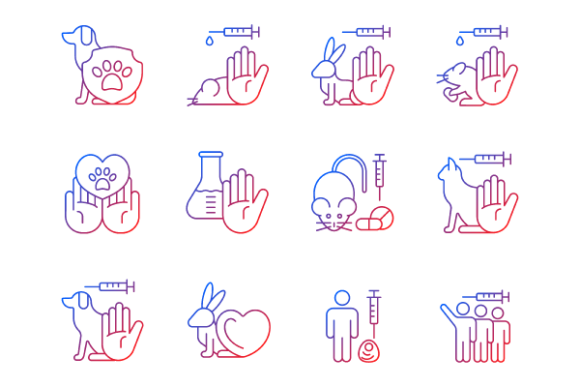
No Animal Testing Gradient Icons Bundle: Visualizing Ethical Beauty and Modern Design
In the rapidly evolving landscape of ethical consumerism, visual communication has become just as critical as product formulation. The No Animal Testing Gradient Icons Bundle represents a pivotal intersection where compassionate values meet contemporary digital aesthetics. For brands, creators, and educators navigating the clean beauty and pet care sectors, this collection serves as more than mere decoration; it is a functional design asset that signals transparency, safety, and modernity. As consumers increasingly scrutinize labels and digital storefronts for cruelty-free certifications, the demand for high-quality, visually engaging symbols has shifted from generic clip art to sophisticated, gradient linear vector icons that align with premium brand identities.
This specific collection addresses a nuanced gap in the market. While standard monochrome icons have served their purpose for decades, modern user interfaces and packaging designs require depth and vibrancy to capture attention without sacrificing clarity. The inclusion of dog and cat protection symbols alongside traditional cosmetic cruelty-free labels acknowledges the broader scope of animal welfare. It recognizes that today’s ethical consumer cares as deeply about their pet’s shampoo as they do about their own skincare. By integrating these themes into a cohesive thin line contour symbols bundle, designers can maintain visual consistency across diverse product lines while effectively communicating complex ethical standards at a glance.
The Evolution of Cruelty-Free Visual Language
Historically, cruelty-free labeling was utilitarian and often stark. Early certification marks were designed primarily for regulatory compliance or quick identification on crowded physical shelves. However, the digital transformation of retail and the rise of social media marketing have fundamentally changed how these symbols are consumed. Users now encounter these icons on mobile app screens, Instagram stories, and detailed infographic elements long before they see physical packaging. This shift necessitated an evolution in design language.
The transition toward gradient linear vectors reflects broader trends in UI/UX design. Flat design, while clean, often lacks the emotional resonance required for topics involving empathy and care. Gradients introduce warmth and dimension, softening the clinical nature of certification marks and making them feel more approachable and human-centric. When a user scrolls through a brochure template or a website landing page, a gradient icon feels native to the modern web environment rather than an afterthought stamped onto the layout. This aesthetic alignment is crucial for maintaining trust; outdated visuals can inadvertently signal outdated practices, whereas fresh, professional graphics reinforce a brand's commitment to current ethical standards.
Bridging Pet Care and Cosmetic Safety
A distinctive feature of this No animal testing gradient linear vector icons bundle is its dual focus on human cosmetics and companion animal protection. In previous years, these categories were often siloed in separate design assets. A designer working on a vegan lipstick line would struggle to find matching iconography for a dog grooming product within the same visual system. This fragmentation led to inconsistent branding for lifestyle companies that span both markets.
Modern households frequently view pet care as an extension of self-care. The "humanization" of pets means that owners apply the same rigorous safety standards to animal products as they do to their own. By providing isolated vector outline illustrations that cover both domains, this bundle supports holistic storytelling. Marketers can create unified campaigns that speak to the entire family unit. For example, an educational blog post about non-toxic living can seamlessly integrate symbols for safe makeup and pet-friendly household cleaners without jarring stylistic shifts. This versatility is essential for agencies and freelancers managing multi-faceted client portfolios.
Technical Versatility Across Formats and Platforms
Practical utility is the cornerstone of any professional design asset. The value of this collection lies heavily in its comprehensive file format support, including JPEG, AI, PNG, EPS, and SVG. Understanding why each format matters helps professionals maximize efficiency in their workflows.
- SVG (Scalable Vector Graphics): Essential for web and mobile app screen pages. SVGs ensure that thin line contours remain crisp on Retina displays and scale infinitely without pixelation, which is vital for responsive design.
- AI and EPS: The industry standards for print production and extensive editing. These source files allow designers to adjust gradient colors, line weights, and compositions to match specific brand guidelines perfectly.
- PNG: Crucial for digital presentations, social media overlays, and quick mockups where transparency is needed but vector editing is not.
- JPEG: Useful for reference, mood boards, and platforms that do not support transparency or vector formats.
This multi-format approach eliminates the friction often associated with stock assets. Designers no longer need to trace low-resolution images or redraw concepts from scratch. Having editable source files means that the cruelty free label for cosmetic can be customized to fit a specific color palette or resized for a tiny ingredient list versus a large billboard. This flexibility directly translates to time savings and higher quality outputs, allowing creatives to focus on strategy and layout rather than asset generation.
Enhancing User Experience Through Clear Iconography
In information design, clarity is king. The thin line contour symbols bundle style is specifically engineered for legibility at small sizes. Thick, filled icons can become muddy when scaled down for mobile navigation bars or compact product packaging. Thin lines with gradient accents provide enough visual weight to be noticeable while preserving negative space that aids readability.
For mobile app developers and UX designers, these icons serve as intuitive navigational cues. A user browsing an e-commerce app should instantly recognize a cruelty-free symbol without needing to read accompanying text. The gradient adds a subtle interactive quality, suggesting a tappable element or a highlighted feature. Furthermore, in infographic elements used for educational content, these symbols act as visual anchors, breaking up dense text and guiding the reader’s eye through complex information about testing methods or certification processes. Good iconography reduces cognitive load, making ethical choices easier and faster for the end consumer.
Streamlining Professional Workflows with BSD Studio
Time is the most scarce resource for freelancers, agency teams, and in-house marketers. Searching for disparate icons that share a consistent style is a notorious productivity killer. The No Animal Testing Gradient Icons Bundle solves this by offering a pre-curated, stylistically unified set. Instead of spending hours adjusting mismatched vectors from different sources, professionals can deploy a complete visual system immediately.
BSD studio understands this workflow imperative. By providing a variety of products, topics, and file types, the shop ensures that designers can maintain momentum across projects. Whether you are building brochure templates for a new organic skincare launch or designing mobile app screen pages for a pet adoption platform, having access to cohesive assets prevents design debt. Consistency builds brand equity; when every touchpoint uses harmonized visuals, the brand feels more established and trustworthy.
Moreover, keeping up with top quality requires access to assets that reflect current design trends. Gradient linear styles are currently favored in tech and wellness sectors for their ability to convey innovation and softness simultaneously. Utilizing this collection allows smaller businesses and independent creators to achieve a polished, agency-level look without the custom illustration budget. It democratizes access to high-end design elements, enabling wider participation in the ethical marketplace.
Future-Proofing Ethical Communication
As regulations around animal testing continue to tighten globally and consumer awareness deepens, the need for clear, standardized, yet attractive labeling will only grow. Investing in high-quality vector assets now is a forward-looking strategy. Unlike raster images that degrade over time or trend-specific illustrations that may look dated in two years, well-crafted linear vector icons possess a timeless quality. They adapt to future rebrands, new platforms, and changing contexts without losing their core meaning.
For educators and advocates, these tools facilitate better communication. Explaining the nuances of "cruelty-free" versus "vegan" or detailing specific testing bans becomes more effective when supported by professional visuals. For businesses, it mitigates risk; using ambiguous or homemade symbols can lead to consumer confusion or skepticism. Professional, recognizable iconography reinforces legitimacy.
Ultimately, the No Animal Testing Gradient Icons Bundle is a testament to the maturity of the ethical design niche. It moves beyond performative symbolism to offer genuine utility, aesthetic sophistication, and technical robustness. Whether you are a solo entrepreneur launching a passion project or a seasoned art director overseeing a global campaign, this collection provides the foundational elements needed to tell a compelling, compassionate story. Count on us in search for icons, brochure templates, infographic elements, and mobile app screen pages to ensure your design work saves time while maintaining the highest standards. Find what you need in our shop to keep your creative output fresh, relevant, and impactful.