Google Slides Template - Canteen: A Practical Guide to Effective Food Presentation
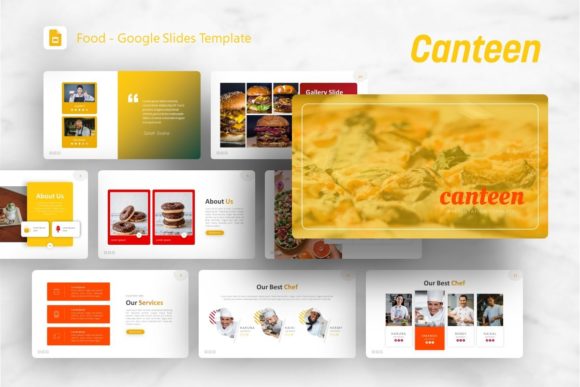
When searching for the perfect visual framework to showcase culinary concepts, menu planning, or hospitality services, many professionals encounter the Google Slides Template - Canteen. This resource is designed specifically to bridge the gap between appetizing food photography and clean, professional data presentation. Whether you are managing a corporate cafeteria, launching a catering startup, or presenting a quarterly review for a restaurant chain, this template offers a structured starting point. However, simply downloading a file does not guarantee a successful presentation. The true value lies in understanding how to adapt these 36 slides to communicate quality and hygiene without overwhelming your audience with clutter.
Interest in this specific template often stems from a need to modernize outdated food service decks. Traditional presentations in this niche can feel sterile or overly chaotic. The Canteen template attempts to solve this by balancing vibrant imagery with organized layouts suitable for business contexts. It serves as a versatile foundation that extends beyond simple menus, supporting pitch decks for food tech startups, portfolio showcases for food photographers, and operational profiles for institutional dining services. Recognizing its intended scope is the first step toward using it effectively rather than forcing it into an incompatible role.
Common Misunderstandings About Versatility and Scope
A frequent mistake occurs when users assume that because a template includes high-quality food placeholders, it is automatically suitable for any culinary-related project. While the Google Slides Template - Canteen is robust, it has a distinct aesthetic geared toward institutional and commercial food service rather than fine dining or home cooking blogs. Using this template for a luxury restaurant pitch might inadvertently signal a "cafeteria" vibe due to its functional, grid-based layout choices. Conversely, trying to force a casual food blog aesthetic into these corporate-ready master slides can create visual dissonance.
To avoid this mismatch, evaluate your brand identity before customization. If your goal is to highlight efficiency, volume, nutrition, or business operations, this template is an excellent fit. If your primary focus is artistic plating or intimate dining experiences, you may need to heavily modify the master slides or select a different base. Understanding this distinction prevents wasted hours reworking layouts that fundamentally clash with your message. Always preview the full slide deck to ensure the underlying structure supports your specific narrative arc.
Overlooking Master Slide Dependencies
Many beginners treat presentation templates as a collection of individual pages rather than a cohesive system built on master slides. When editing the Google Slides Template - Canteen, users often resize images or move text boxes on individual slides, unaware that these elements are anchored to global styles. This leads to inconsistent formatting where some slides look polished while others appear broken or misaligned. It also makes future updates incredibly tedious, as changes must be applied manually across dozens of slides.
The corrective approach is to spend time in the "Edit Master" view before touching individual content. Since this template features handcrafted infographics and pixel-perfect illustrations based on master slides, respecting this hierarchy ensures scalability. If you need to change the color palette to match your company branding, do so at the master level. This preserves the integrity of the vector icons and resizable graphics. Treating the template as a design system rather than a scrapbook saves significant time and maintains professional consistency throughout the 36-slide deck.
Navigating File Formats and Compatibility Issues
Confusion regarding file types is another source of frustration. Although marketed as a Google Slides resource, the downloadable package typically includes a PowerPoint .PPTX file. Users sometimes attempt to open this directly in Google Slides via upload, which can result in font substitution, shifted layers, or broken infographic links. Assuming seamless conversion without verification is a risky shortcut that can degrade the visual quality you paid for.
Best practice involves opening the .PPTX file in Microsoft PowerPoint first to verify that all fonts and vector elements render correctly. Once confirmed, save a copy to your Google Drive and convert it there. Check every slide, paying special attention to the handcrafted infographics and picture placeholders. Some complex shapes may require manual adjustment after conversion. By validating the file in its native format first, you establish a baseline for troubleshooting. Additionally, always refer to the included documentation file; it often contains specific instructions for font installation or link management that prevent common rendering errors.
Mismanaging Image Assets and Licensing
Perhaps the most critical oversight involves image licensing. The demo version of the Google Slides Template - Canteen displays stunning, professional food photography that sets a high visual standard. However, new users frequently miss the note stating that all images in the demo are for preview purposes only and are not included in the download. Replacing these placeholders with low-resolution stock photos or unlicensed internet images instantly diminishes the template’s premium feel and exposes businesses to legal risks.
Plan your visual assets before finalizing the presentation. Budget for high-quality, licensed food photography or schedule a professional shoot if original content is required. Utilize the template’s drag-and-drop picture placeholders correctly; they are designed to crop and mask images consistently. Uploading poorly lit or improperly sized photos defeats the purpose of using a professionally designed frame. Remember that the template provides the vessel, but your content provides the value. Investing in proper imagery ensures the final output matches the polish of the original design.
Evaluating Content Density and Infographic Usage
Having 36 slides available can tempt presenters to use all of them, leading to bloated, unfocused decks. In food presentation, less is often more. Overloading slides with too many menu items, nutritional charts, or process diagrams distracts from the core message. The Google Slides Template - Canteen includes extensive options, but curation is key. Selecting only the slides that directly support your objectives creates a tighter, more persuasive narrative.
Similarly, misuse of the included infographics can confuse rather than clarify. These handcrafted elements are powerful tools for displaying data like ingredient sourcing, waste reduction metrics, or customer satisfaction scores. However, stuffing too much data into a single graphic renders it illegible. Use infographics to simplify complex information, not to decorate empty space. Ensure that every chart or diagram serves a clear communicative function. If a simple bullet list conveys the point better than a complex circular diagram, choose clarity over decoration. Your audience needs to digest information as easily as the food being presented.
Checking Technical Specifications Before Purchase
Before committing to this or any presentation asset, conduct a thorough pre-purchase evaluation. Verify that the "Fully Editable" claim applies to the specific elements you intend to change. Some templates lock certain decorative vectors or restrict color changes to preserve the designer's vision. Read user reviews specifically mentioning Google Slides compatibility if that is your primary platform. Confirm that the documentation file is comprehensive and up-to-date.
Also, consider the long-term utility of the template. Will the style remain relevant for future quarterly reports or annual reviews? Does the master slide structure allow for easy addition of new layouts as your business grows? Evaluating these factors transforms a one-time purchase into a sustainable design asset. By approaching the Google Slides Template - Canteen with informed expectations and technical awareness, you ensure it serves as a reliable tool for effective communication rather than a source of preventable frustration.