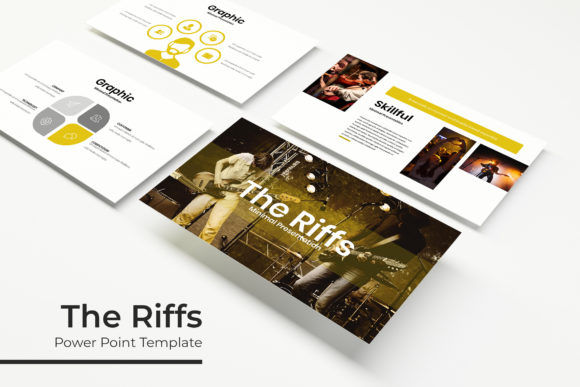
The Riffs Power Point Template: A Practical Guide to Streamlined Presentation Design
Creating a compelling presentation often involves balancing two competing demands: the need for high-quality visual design and the pressure of a tight deadline. For professionals, educators, and business owners, starting from a blank slide is rarely an efficient use of time. This is where comprehensive design systems like The Riffs Power Point Template bridge the gap between creative aspiration and practical execution. Rather than being a simple collection of backgrounds, this template functions as a modular design toolkit intended to standardize visual communication while retaining enough flexibility to suit diverse narratives.
Understanding the architecture of such a robust template is essential for maximizing its value. With a total of 150 slides distributed across five distinct color variations, The Riffs offers a structured approach to deck building that goes beyond mere aesthetics. This article explores the functional characteristics of this template, examining how its specific features translate into real-world utility for creators who need to communicate complex ideas clearly and professionally.
Deconstructing the Modular Slide Architecture
The primary advantage of a high-volume template lies in its categorization. The Riffs Power Point Template is organized into 30 unique slide designs per color theme, resulting in five complete PPTX files. This separation is not arbitrary; it serves a strategic purpose for workflow management. Instead of scrolling through a single file containing 150 mixed layouts, users can select a specific color palette that aligns with their brand identity or project mood before beginning the editing process.
This modularity reduces cognitive load during the design phase. When you are focused on content strategy, having a curated set of 30 relevant layouts allows for faster decision-making. The inclusion of widescreen formats ensures compatibility with modern display standards, which is critical for hybrid meetings where audiences may be viewing presentations on everything from large conference room monitors to laptop screens. By providing both standard and widescreen PPTX files, the template mitigates the risk of formatting errors that often occur when resizing legacy decks.
The Role of Master Slides in Consistency
A common frustration with lower-quality templates is the inability to make global changes. If a logo needs to be moved or a font updated, doing so manually across dozens of slides is tedious and prone to error. The Riffs addresses this through a rigorous adherence to Master Slide architecture. Elements placed on master slides propagate throughout the section, ensuring pixel-perfect alignment and consistency without repetitive manual adjustments.
For teams collaborating on a single deck, this feature is invaluable. It establishes a "source of truth" for the design system. When a team member adds a new slide based on the master layout, they automatically inherit the correct margins, typography hierarchy, and color codes. This technical foundation transforms the template from a static product into a dynamic workspace that supports collaborative efficiency.
Visual Communication Through Handcrafted Infographics
Data visualization is often the weakest link in amateur presentations. Standard chart tools in presentation software can feel rigid, leading many users to avoid data entirely or settle for generic bar graphs. The Riffs distinguishes itself by including handcrafted infographic slides that are fully editable within PowerPoint. These are not flat images; they are vector-based compositions constructed from native shapes.
This distinction matters for several reasons:
- Editability: Users can change colors, resize elements, and modify text directly without needing external graphic design software like Adobe Illustrator.
- Scalability: Because the graphics are vector-based, they remain crisp at any zoom level or projection size.
- Contextual Adaptation: The infographics are designed to match the five premade color schemes, ensuring that data visuals never look out of place against the background.
Whether explaining a quarterly revenue stream, outlining a project timeline, or comparing product features, these pre-built visual metaphors save hours of design time. They allow non-designers to achieve a level of visual sophistication that typically requires professional intervention.
Portfolio and Gallery Functionality
Beyond data, many presentations require the showcase of visual assets. The template includes dedicated gallery and portfolio slides featuring resizable and editable picture placeholders. These layouts utilize drag-and-drop functionality, streamlining the process of inserting custom photography. Unlike basic image frames, these placeholders are integrated into the slide’s composition, maintaining aspect ratios and alignment guides that prevent the layout from breaking when new images are introduced.
This feature is particularly useful for creative agencies, architects, photographers, and e-commerce businesses. However, it also serves corporate users who need to present case studies, team bios, or facility tours. The ease of swapping placeholder images encourages users to update their decks frequently, keeping content fresh rather than relying on outdated visuals because the replacement process is too cumbersome.
Practical Considerations and Asset Management
While The Riffs Power Point Template provides extensive structural and graphical assets, users must understand what is included versus what is illustrative. A critical note for all potential users is that photographs and pictures used in the preview are not included. These images serve solely to demonstrate layout possibilities. This is standard industry practice, but it requires preparation. Users should have their own image library ready or budget for stock photography to populate the gallery slides effectively.
To assist with typography, the package includes a Readme file with direct download links for the free fonts used in the design. Installing these fonts prior to opening the file is mandatory to preserve the intended aesthetic. Without them, PowerPoint will substitute default system fonts, which can alter spacing and line breaks. Taking five minutes to install the recommended typefaces ensures the "pixel-perfect" promise of the template is maintained.
Evaluating Suitability for Your Needs
Is a 150-slide template necessary for every project? Not always. However, evaluating suitability should be based on long-term utility rather than immediate need. Even if a current project only requires 15 slides, owning a comprehensive system like The Riffs provides a repository of backup options. When a stakeholder requests an unexpected addition—such as a comparison matrix or a team introduction slide—having a pre-designed solution prevents last-minute scrambling.
The template is best suited for:
- Frequent Presenters: Consultants and sales professionals who create multiple decks monthly will see the highest ROI through time savings.
- Brand-Conscious Organizations: Teams that need to maintain strict visual guidelines without hiring a designer for every minor update.
- Educators and Trainers: Instructors who need varied layouts to maintain student engagement over long lecture series.
- Creative Professionals: Freelancers who need a polished portfolio structure that can be quickly customized for different client pitches.
Optimizing Workflow with Section Breaks
Narrative flow is as important as visual design. The Riffs includes specialized section break slides that serve as visual punctuation marks within a presentation. These transitions help segment content into digestible chapters, guiding the audience through complex topics. From a user experience perspective, these breaks provide natural pauses for Q&A or mental processing.
From an editing perspective, section breaks act as organizational anchors. When navigating a 30-slide deck in the thumbnail view, these distinct slides make it easier to locate specific content blocks. This structural organization complements the visual design, reinforcing the idea that a template is a communication tool, not just a decoration kit.
Making the Most of Color Variations
The five premade color variations offer more than just aesthetic choice; they provide psychological framing. Different colors evoke different responses. A blue-dominant palette might convey trust and stability for a financial report, while a vibrant orange or green variation might better suit a creative brainstorming session or an energetic product launch. Having five distinct options allows a single user to adapt the same underlying structure to different clients or departments without the presentation feeling repetitive.
Furthermore, because these colors are applied via master slides and theme settings, switching between them is generally straightforward. This flexibility extends the lifespan of the template. Rather than exhausting a single look, users can rotate through palettes to keep their personal or organizational branding dynamic and responsive to context.
Final Thoughts on Digital Presentation Assets
In an era where digital communication is ubiquitous, the quality of presentation materials directly influences perceived competence and credibility. The Riffs Power Point Template represents a pragmatic investment in professional communication infrastructure. By combining volume (150 slides) with technical integrity (master slides, editable vectors, widescreen support), it addresses the most common pain points of deck creation.
Success with this template depends on understanding its nature as a framework. It provides the bones and the skin of a presentation, but the muscle—the content, the narrative, and the authentic imagery—must come from the user. When approached with this mindset, The Riffs becomes more than a downloadable file; it becomes a reliable partner in the ongoing process of clear, effective visual storytelling. Whether for a high-stakes investor pitch or an internal training module, the ability to deploy professional-grade design rapidly is a skill multiplier that pays dividends across countless future projects.